Saturday, April 14, 2007
CFBA Saturday: Coral Moon
I've been out of the Christian Fiction Bloggers Alliance loop for a while. With the move and Flannery O'Connor's short stories (I finished!) and Stephen King's Lisey's Story (another book with a whole lotta pages), I haven't had time for much else. Fortunately, I made time for Brandilyn Collins' Coral Moon, the second book in her Kanner Lake series.
Coral Moon picks up just about where Violet Dawn left off. The heroines of the first book are rooming together when they find another body. Bummer, ladies. The majority of the book is devoted to finding the killer before he (or she) strikes again ... or again. Interspersed with the main story are some chapters told from the killer's perspective, as well as some flashbacks detailing why the killer is so messed up.
There's some really tense stuff here. Tense to the point that I'd recommend changing all the lightbulbs in your house before tucking in. One bulb across the room popped while I was reading -- had to be a chapter about "the ghost," of course -- and that gave me the willies for a good while afterward.
About the only nit that I'd pick has to do with the police investigation. Once the story establishes that the cops find the "ghost theory" preposterous (don't dismiss it too early, though, OK?), there never really is a point where they approach the investigation from the line of "who would/could pull such a con and/or why?" It seems to me to be a reasonable line of thinking; I'm not a cop, though, so maybe not. (Fred, Daphne and Velma never ask those questions either and they do just fine in their ghost-busting endeavors; 'course they're just meddling kids with a dog...)
It was great catching up with the Java Joint gang again. Wilbur keeps his shirt on the whole time, so don't let his first-book exhibitionism keep you from grabbing a biggie mocha from Bailey's. Some good action goes down there too, so it's more integrated into the book than it was at times in Violet Dawn.
Can't wait 'til Crimson Eve comes out this Fall.
(Keep up-to-date with Brandilyn at her Forensics & Faith blog; or the Java Joint gang at Scenes & Beans.)
Coral Moon picks up just about where Violet Dawn left off. The heroines of the first book are rooming together when they find another body. Bummer, ladies. The majority of the book is devoted to finding the killer before he (or she) strikes again ... or again. Interspersed with the main story are some chapters told from the killer's perspective, as well as some flashbacks detailing why the killer is so messed up.
There's some really tense stuff here. Tense to the point that I'd recommend changing all the lightbulbs in your house before tucking in. One bulb across the room popped while I was reading -- had to be a chapter about "the ghost," of course -- and that gave me the willies for a good while afterward.
About the only nit that I'd pick has to do with the police investigation. Once the story establishes that the cops find the "ghost theory" preposterous (don't dismiss it too early, though, OK?), there never really is a point where they approach the investigation from the line of "who would/could pull such a con and/or why?" It seems to me to be a reasonable line of thinking; I'm not a cop, though, so maybe not. (Fred, Daphne and Velma never ask those questions either and they do just fine in their ghost-busting endeavors; 'course they're just meddling kids with a dog...)
It was great catching up with the Java Joint gang again. Wilbur keeps his shirt on the whole time, so don't let his first-book exhibitionism keep you from grabbing a biggie mocha from Bailey's. Some good action goes down there too, so it's more integrated into the book than it was at times in Violet Dawn.
Can't wait 'til Crimson Eve comes out this Fall.
(Keep up-to-date with Brandilyn at her Forensics & Faith blog; or the Java Joint gang at Scenes & Beans.)
Labels: Book Reviews, Brandilyn Collins, CFBA, Wilbur Hucks


Saturday, February 17, 2007
I Should Have Complained Sooner
Yesterday I mentioned that I had yet to receive my review copy of Sally Stuart's Christian Writers' Market Guide. It came in today's mail.
 This is a honkin big tome. Not as big as the full-blown Writer's Digest Writers' Market, but easily on par with WD's Novel/Short Story edition. I thumbed through quickly to see if the magazines I was published in last year were listed. Most were (Ray Gun Revival, a late starter last year isn't), though some of the payment info is out of date -- again it's possible it was changed or arrived too late (if at all) to make the 2007 edition. Still, compared to WD, it has many Christian-targeted publications the big guys miss. As a place to begin your market research, it's an excellent resource.
The accompanying CD was a bit of a disappointment, though. While it contains all the information in the hard copy, it doesn't take advantage of its new-media presentation (these appear to be production documents, Word and PDF -- the PDF has the printer's trim marks on the pages). Entries aren't hyperlinked from the table of contents or index. Websites and email addresses aren't linked, either. You can fix the latter by turning on the Autoformat "hyperlinks" option in Word, then running the Autoformat (get yourself a cup of coffee while it runs), and then Save As'ing to your hard drive, but that's a lot of work for something that would've been a not-too-hard fix for the publisher to make. The CD adds some value to the book, but I can't help thinking it could have added a lot more.
Bottom line, this is a great resource for a writer targeting Christian audiences. If you're thinking and hoping and praying that this is the year you'll make it into print (or make it into print more), get yourself a copy now. (The year's almost 1/6th over, for crying out loud.)
This is a honkin big tome. Not as big as the full-blown Writer's Digest Writers' Market, but easily on par with WD's Novel/Short Story edition. I thumbed through quickly to see if the magazines I was published in last year were listed. Most were (Ray Gun Revival, a late starter last year isn't), though some of the payment info is out of date -- again it's possible it was changed or arrived too late (if at all) to make the 2007 edition. Still, compared to WD, it has many Christian-targeted publications the big guys miss. As a place to begin your market research, it's an excellent resource.The accompanying CD was a bit of a disappointment, though. While it contains all the information in the hard copy, it doesn't take advantage of its new-media presentation (these appear to be production documents, Word and PDF -- the PDF has the printer's trim marks on the pages). Entries aren't hyperlinked from the table of contents or index. Websites and email addresses aren't linked, either. You can fix the latter by turning on the Autoformat "hyperlinks" option in Word, then running the Autoformat (get yourself a cup of coffee while it runs), and then Save As'ing to your hard drive, but that's a lot of work for something that would've been a not-too-hard fix for the publisher to make. The CD adds some value to the book, but I can't help thinking it could have added a lot more.
Bottom line, this is a great resource for a writer targeting Christian audiences. If you're thinking and hoping and praying that this is the year you'll make it into print (or make it into print more), get yourself a copy now. (The year's almost 1/6th over, for crying out loud.)
Labels: Book Reviews, Books, CFBA
Friday, February 02, 2007
Book Chat with Robert Liparulo
I mentioned yesterday that one of the books I finished last month was Germ by Robert Liparulo. Today, more on the book and Five Questions with Robert.
 I admit I had a hard time getting into the story. Might be my fault, I'm more of a mystery guy, not so much a thriller junkie. Despite the fact that the opening chapters were a high-speed freeway chase with guns blazing and tech gear glitching and blood and mayhem and intrigue, it took me three concerted attempts to get through the first forty or so pages. A lot was happening, but it didn't feel like a lot was happening.
That's probably a rotten thing to say, but I know there are readers who will put a book down and never pick it up again (or buy it in the first place) if they're not immediately grabbed. To those people I'd say, give it time. (It took me about six tries to get into The Lord of the Rings, so Germ's in good company. And I was reading an advance review copy, so it's possible changes for the better came before the first edition went to press.)
Things take a turn around Chapter 20 -- when the adrenaline-pumped opening is done, the stakes have been established (Liparulo's not foolin' around, folks), and most of the important backstory has been divulged -- and I found myself more immersed in the story. Cliffhangers began to appear at the breaks and, suddenly, the next three- to five-page chapters became must-reads.
I finished the book in a couple late night sittings. Up past 1am the final night to find how it all turned out. I'm happy to say I liked the result. Worth the initial effort, definitely.
If you're looking for a story with action, suspense, and more gooshy moments than a CSI marathon, give Germ a read.
And now, Five Questions...
Be sure to check out robertliparulo.com for more on the thrillers, "Germ: The Video Game," a chance to win an iPod Nano, and more!
And visit other CFBA sites (see sidebar) for other blog tour stops.
I admit I had a hard time getting into the story. Might be my fault, I'm more of a mystery guy, not so much a thriller junkie. Despite the fact that the opening chapters were a high-speed freeway chase with guns blazing and tech gear glitching and blood and mayhem and intrigue, it took me three concerted attempts to get through the first forty or so pages. A lot was happening, but it didn't feel like a lot was happening. That's probably a rotten thing to say, but I know there are readers who will put a book down and never pick it up again (or buy it in the first place) if they're not immediately grabbed. To those people I'd say, give it time. (It took me about six tries to get into The Lord of the Rings, so Germ's in good company. And I was reading an advance review copy, so it's possible changes for the better came before the first edition went to press.)
Things take a turn around Chapter 20 -- when the adrenaline-pumped opening is done, the stakes have been established (Liparulo's not foolin' around, folks), and most of the important backstory has been divulged -- and I found myself more immersed in the story. Cliffhangers began to appear at the breaks and, suddenly, the next three- to five-page chapters became must-reads.
I finished the book in a couple late night sittings. Up past 1am the final night to find how it all turned out. I'm happy to say I liked the result. Worth the initial effort, definitely.
If you're looking for a story with action, suspense, and more gooshy moments than a CSI marathon, give Germ a read.
And now, Five Questions...
- Common writing advice is to "kill your darlings," those characters, scenes, moments, sentences in a book that are brilliant but just don't work with everything else. Anything in Germ that wowie-wow-wowed you when you wrote it, but had to take one for the team and ended up being cut?
With most of my writing, I’d say no. I tend to write slowly, methodically, editing as I go. I also have a very clear picture of the story in my head before I start writing. Germ, however, was a bit different. I really enjoyed the characters and the story. As a result, I over-wrote. Originally, I had more backstory of Julia and Donnelley's, more about her mother, more of Kendrick Reynolds's role in the creation of biological warfare and Karl Litt, and his search for Litt of the years. My original word count was about 200,000. By the time I killed my darlings -- tightening the writing and picking up the pace -- I had about 135,000. I killed off a whole bunch of children. - If the director or casting agent for "Germ: The Movie" asked you to appear in a cameo, what character would you most want to play (and why)?
Even though I’m not of South American decent (but rather Italian), I’d like to play Jorge Prieto, the escapee from Litt’s camp who faces Gregor’s wrath and the Deadeyes. He’s a tragic figure, who just wants to get home to his family, or at least let his family know that he had been kidnapped and did not simply abandon them. He’s a man of principle. - Among my favorite scenes in the book was the one that took place in Sweaty Dave's comic book store. Were/Are you an avid collector? What titles? What impact, if any, did they have on your creativity?
Larry Hama is a friend of mine. He wrote many of the Wolverine, X-Men and G.I. Joe comics. I do collect Wolverine and X-Men, plus anything Frank Miller does. Larry inspires me to be a concise writer. He’s a master of word economics. Frank’s work inspires me to do my best. He really is a genius, so visually minded, and he knows how to share what’s in his head -- the most difficult part of the writing (or any artistic) process.
When I was a kid, I collected Tales From the Crypt and a weird comic that didn’t last long called Plop. It featured stories of people who always got their comeuppance in the end. Real black humor.
Sweaty Dave is based on a person who once stalked Larry all around New York and through several conventions. James Byron Huggins and I laughed until we were sick when we heard Larry’s Sweaty Dave stories. - Who'd win in a biowar fight, Karl Litt or Sato Matsushita, the plague-maker of Tim Downs fame?
Oh, I’d have to say Karl would. As nasty as Sato is, Karl’s got this German (in fact, Nazi) blood flowing through him that makes him tough as nails. Couple that with the insanity that losing his family triggered -- he’s a man with nothing to lose and those are the worst to face. I have to say, though, Plague Maker is a great book and Tim is a terrific writer. - Any further adventures for Julia Matheson? And if you're not working on that, what are you working on?
I would like to revisit Julia’s world—eventually. The producers who bought the rights asked about a sequel, which got me thinking. So, my answer is a resounding... maybe.
I just finished Deadfall. It’s the story of a group of guys who go up into the Canadian wilderness to get away from it all. They’ve all had a really rough year. They encounter some rich gamer punks who are terrorizing a small town with a new weapon one of their father’s companies developed. Very high-tech. So now these guys, armed with only a bow and arrow, face off with these young people with very little moral values -- and a big, nasty, seemingly unstoppable weapon. Oh, and the good guys are also trying to save the townsfolk.
It’s full of the same sort of action/adventure/suspense I put in [first novel Comes a Horseman] and Germ, but it’s very different from those books, as well, in that it all takes place in a small area of Northern Saskatchewan, there are no cops, and no big conspiracy. My intension was to write a very entertaining, fast-paced story that is also intimate and character-driven. I just finished it this week, and I think I hit the mark. We’ll see.
Thanks for playing along, Robert.
Be sure to check out robertliparulo.com for more on the thrillers, "Germ: The Video Game," a chance to win an iPod Nano, and more!
And visit other CFBA sites (see sidebar) for other blog tour stops.
Labels: Book Chat, Book Reviews, Books, CFBA
Sunday, November 19, 2006
Book Chat with Rene Gutteridge
As promised on Friday, here are the answers to the five questions I posed to Rene Gutteridge, author of Scoop.
 To recap the novel: Scoop tells the tale of Hayden Hazard, former clown (who's also clownaphobic -- that disease has a real name; read the book to find out what it's actually called), who winds up as an intern at a low-rated nightly news show only to find herself thrust into the spotlight and behind the anchor desk when her boss, executive producer Hugo Talley, has the Worst Week Ever.
Written with wit and charm, Rene keeps the pace brisk and the ending happy. The cynical and jaded might call it Fairy Tale HappyTM, but if you remain cynical and jaded after reading Scoop then something's wrong with you, maybe two things (cynicism and jadedness, perhaps, hmmmm). It's a fun book and might just soften up your hardened heart.
But let's throw to the questions. Quizmaster, take it away.
To recap the novel: Scoop tells the tale of Hayden Hazard, former clown (who's also clownaphobic -- that disease has a real name; read the book to find out what it's actually called), who winds up as an intern at a low-rated nightly news show only to find herself thrust into the spotlight and behind the anchor desk when her boss, executive producer Hugo Talley, has the Worst Week Ever.Written with wit and charm, Rene keeps the pace brisk and the ending happy. The cynical and jaded might call it Fairy Tale HappyTM, but if you remain cynical and jaded after reading Scoop then something's wrong with you, maybe two things (cynicism and jadedness, perhaps, hmmmm). It's a fun book and might just soften up your hardened heart.
But let's throw to the questions. Quizmaster, take it away.
- Sir Arthur Quiller-Couch gave the writing advice: Murder your darlings. Which darling was the most difficult for you to kill?
Clyde from Ghost Writer. - At one point in the novel, a typographical error causes Hayden Hazard to suddenly become the Austrian composer [Franz Joseph/Papa] Haydn (1732-1809). What did he think of our modern world and what did he have on his iPod?
(Laughing) I have no idea. Don't know Haydn and don't own an iPod. Maybe I should brush up on my Austrian composers?? Or go hunt down my copy editor... - Ray Duffey and the Underwear of Decency (great line, by the way): Boxers or Briefs?
Boxers. - Hayden, like Mary Poppins, is "practically perfect in every way." But at one point in the story she quips that the audience loves her because "they don't know me yet." So which of these sins is lurking in the cobwebs of her soul: Wears white after Labor Day. Uses the wrong fork during the salad course. As a child, left the toilet seat down, greatly inconveniencing her brothers. Flosses in public.
These are sins??? Yikes. I'm toast. [Chris: Okay, they're not really sins -- wearing white after Labor Day, maybe.] Knowing Hayden, she could pull any of these off without a problem. - Which Hazard sibling gets the occupational treatment next book in the series? And anything else you'd like to tell...
Next up is Mack, in Snitch.
Labels: Book Chat, Book Reviews, CFBA
Friday, October 27, 2006
Book Chat with Jerome Teel
With the current political cycle spinning madly around us, Jerome Teel's The Election is a timely choice for this week's CFBA Blog Tour.
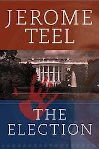 What's the deal? Democratic nominee (and vice president) Ed Burke faces off against Republican senator Mac Foster in the political story line; attorney Jake Reed defends his wrongly-accused client Jed McClellan in the legal-thriller side. A mysterious trio of businessmen with an agenda to take over the world (in a plot that'd do a James Bond villain proud) span the two, pulling strings -- and triggers -- as necessary.
If you're a conservative (should that have a capital C?) Christian, you'll probably enjoy the book. If you have a more liberal/progressive view of how the country should operate, the Democrats-as-bad-guys storyline may hamper your getting into the story. Please Note: Teel doesn't portray Burke and his group as evil, vile, mean, and nasty, but they're not the one's the story is rooting for. (There were a few eye-rolling moments, but, then again, the book never sets out to change anyone's politics.) The trio of power brokers are both-sides-of-the-bread butterers, having also picked a Republican candidate who didn't make through the Primaries, so while they're apolitical (and one is quite evil, vile, mean, and nasty) the taint rubs off on Burke & Co.
The legal side of things is Grisham-esque, though with a happier ending than The Big Grish usually musters. This one kept me guessing, and for that reason I enjoyed it more than the political side.
In many ways the book reminds me of old-school (late 80s-mid 90s) Christian Fiction. It even has a conversion scene, which I haven't seen for a while. I'm not knocking the genre, and Teel handles it well.
Teel also handled my Five Questions well. Behold:
And if The Election seems like it's driving up your political street, be sure to pick up a copy.
What's the deal? Democratic nominee (and vice president) Ed Burke faces off against Republican senator Mac Foster in the political story line; attorney Jake Reed defends his wrongly-accused client Jed McClellan in the legal-thriller side. A mysterious trio of businessmen with an agenda to take over the world (in a plot that'd do a James Bond villain proud) span the two, pulling strings -- and triggers -- as necessary.If you're a conservative (should that have a capital C?) Christian, you'll probably enjoy the book. If you have a more liberal/progressive view of how the country should operate, the Democrats-as-bad-guys storyline may hamper your getting into the story. Please Note: Teel doesn't portray Burke and his group as evil, vile, mean, and nasty, but they're not the one's the story is rooting for. (There were a few eye-rolling moments, but, then again, the book never sets out to change anyone's politics.) The trio of power brokers are both-sides-of-the-bread butterers, having also picked a Republican candidate who didn't make through the Primaries, so while they're apolitical (and one is quite evil, vile, mean, and nasty) the taint rubs off on Burke & Co.
The legal side of things is Grisham-esque, though with a happier ending than The Big Grish usually musters. This one kept me guessing, and for that reason I enjoyed it more than the political side.
In many ways the book reminds me of old-school (late 80s-mid 90s) Christian Fiction. It even has a conversion scene, which I haven't seen for a while. I'm not knocking the genre, and Teel handles it well.
Teel also handled my Five Questions well. Behold:
- Which "darling" (character/scene/plot element) was most painful to kill?
Two things I hated. First, I hated for the bad guy thugs to attack Jake's daughter in her bedroom. That was a tough one to write. Second, I hated killing off the deputy sheriff toward the end of the book. He had a wife and kids. - Which did you find more enjoyable to write: the political scenes (Burke v. Foster) or the legal ones (the organization v. Jake)?
I enjoyed the political scenes much more than the legal scenes. - Presidential nominee Mac Foster came off as a pretty perfect guy. But nobody's perfect, so which of these flaws does he have? Eats crackers in bed. Clips his toenails while watching TV with the wife. Puts his elbows on the dinner table. Can't spell potato.
Mac's biggest imperfection would be putting his elbows on the dinner table. - Your good-guy politician is named Mac, and there's a tradition of the good guys in movies and TV using Macintosh computers: what computer make/model do you happen to use?
I've changed computers since The Election was written. I'm currently using a knock-off. It's a Multipro. - Your bio at the end of the book mentions you're at work on another novel and your website lists The Divine Appointment coming out in the middle of next year. Sequel, stand-alone or hybrid (taking place during the Foster administration but not involving any of the principals of The Election)?
The Divine Appointment is a stand alone. I debated with making it be a sequel but ultimately decided against it. Both The Election and The Divine Appointment lend themselves to sequels/hybrids in the future.
And if The Election seems like it's driving up your political street, be sure to pick up a copy.
Labels: Book Chat, Book Reviews
Thursday, September 28, 2006
Book Chat with Brandilyn Collins 2: Electric ... Never Mind
Back in April I chatted with Brandilyn Collins about her then-new novel, Web of Lies. WoL was the end of one series, Violet Dawn is the beginning of another.
 Set in Kanner Lake, Idaho, Violet Dawn tells Paige Williams's story: how she finds a dead body, what she does with it, and what comes next. It also tells the stories of about a dozen other Kanner Lake residents. Some of them, like police chief Vince Edwards and fortune-seeking reporter Leslie Brymes, are directly involved in the unfolding of events; then there are the others, Hank and Janet Dretcher (pastor and his missus), Carla Radling (realtor), Wilbur Hucks (mr. crankypants), et al. While they're not front and center, this handful of "local color" keeps the reader rooted in the setting -- and rooting for Paige to overcome her difficulties and become part of it too.
Java Joint, the local sandwich and coffee hang-out, is the nexus of Kanner Lake life. It's where we find out who the locals are, what makes the town "the town," get a little gossipy exposition (it never takes you out of the story), find a little humor amid the grim doings of a murder investigation.
Java Joint is also the scene of one of Brandilyn's marketing efforts for the series: a website where the locals blog about the town. Other writers (writers who are not Brandilyn Collins) were invited to bring the characters to life, first through auditioning, then through bi-weekly blog entries. The blog takes place in real-time, so on the dates when "certain events" in the book occured the characters reacted (without spoiling the fun for future readers). Most entries are anecdotes about the characters' lives and have seemingly nothing to do with the books themselves. Are there clues dropped in? You never know.
As one of the four writers of Wilbur Hucks, I thought I'd take this Blog Tour/Book Chat opportunity to talk about Wilbur rather than ask broader questions about the book itself. (Got to do research, somehow...) The five questions went like this:
While not as ooky as Web of Lies, Violet Dawn is still a suspenseful -- suspense-filled -- mystery. Not so much Whodunit as Whydoodit, the book will have you regularly reminding yourself to breathe. Next in the series: Coral Moon (March '07). The prologue appears at the end of Violet Dawn ... it's a doozy.
For more about Brandilyn's writing -- what's coming up, what's new in the biz, how and why she writes, the care and feeding of agents and editors -- visit her Forensics & Faith blog.
For more stops on the Violet Dawn Blog Tour, check the blog roll under the CFBA graphic near the bottom of the left-hand sidebar (under Affiliated Affiliations).
Set in Kanner Lake, Idaho, Violet Dawn tells Paige Williams's story: how she finds a dead body, what she does with it, and what comes next. It also tells the stories of about a dozen other Kanner Lake residents. Some of them, like police chief Vince Edwards and fortune-seeking reporter Leslie Brymes, are directly involved in the unfolding of events; then there are the others, Hank and Janet Dretcher (pastor and his missus), Carla Radling (realtor), Wilbur Hucks (mr. crankypants), et al. While they're not front and center, this handful of "local color" keeps the reader rooted in the setting -- and rooting for Paige to overcome her difficulties and become part of it too.Java Joint, the local sandwich and coffee hang-out, is the nexus of Kanner Lake life. It's where we find out who the locals are, what makes the town "the town," get a little gossipy exposition (it never takes you out of the story), find a little humor amid the grim doings of a murder investigation.
Java Joint is also the scene of one of Brandilyn's marketing efforts for the series: a website where the locals blog about the town. Other writers (writers who are not Brandilyn Collins) were invited to bring the characters to life, first through auditioning, then through bi-weekly blog entries. The blog takes place in real-time, so on the dates when "certain events" in the book occured the characters reacted (without spoiling the fun for future readers). Most entries are anecdotes about the characters' lives and have seemingly nothing to do with the books themselves. Are there clues dropped in? You never know.
As one of the four writers of Wilbur Hucks, I thought I'd take this Blog Tour/Book Chat opportunity to talk about Wilbur rather than ask broader questions about the book itself. (Got to do research, somehow...) The five questions went like this:
- A friend of mine recently moved his family up to Coeur d'Alene to bootstrap a new church. They moved into a house on Wilbur Avenue. Coincidence or have characters been named after Idaho/Cd'A locations?
No coincidence, but it's the other way around. The street was named after Wilbur Hucks. He is famous, you know. - How much did being named Wilbur (instead of William or Wilfred or Wilmer Valderrama) have to do with him becoming a crotchety old man? (And Hucks, sounds like you're getting ready to spit. Poor fella never had a chance, huh?)
Look, I didn't birth the guy, nor name him. He came like that. What was I supposed to do? Tell him his moniker was lousy? - It's Any-Pie-for-$6 Month at Marie Callendar's; Wilbur steps up to the display case and orders what flavor? (for himself; he'll order a separate pie for Trudy [Mrs. Hucks] should she so desire)
Wilbur loves huckleberry, as these berries are ubiquitous to the north Idaho area, and he's a true Idahoan. Trudy goes bonkers for lemon meringue. It's just the right combination of sweet and tart--much like Wilbur. - Wilbur's favorite movie?
A Christmas Story. It reminds him of when he was a kid and wanted a BB gun. Plus he once did his own rendition of that getting-the-tongue-stuck-on-the-icy-flagpole thing. - Exempting Oscar the Grouch, Sam the Eagle, and Statler and Waldorf (the balcony guys), who is Wilbur's favorite Muppet ... and why?
Wilbur didn't even know who the Muppets were until a little neighbor girl chattered away to him about them one day. He accepted her invitation to watch one of the Muppet movies with her and her mom. Wilbur loved Animal right away. Animal's so . . . out there. Like Wilbur.
While not as ooky as Web of Lies, Violet Dawn is still a suspenseful -- suspense-filled -- mystery. Not so much Whodunit as Whydoodit, the book will have you regularly reminding yourself to breathe. Next in the series: Coral Moon (March '07). The prologue appears at the end of Violet Dawn ... it's a doozy.
For more about Brandilyn's writing -- what's coming up, what's new in the biz, how and why she writes, the care and feeding of agents and editors -- visit her Forensics & Faith blog.
For more stops on the Violet Dawn Blog Tour, check the blog roll under the CFBA graphic near the bottom of the left-hand sidebar (under Affiliated Affiliations).
Labels: Book Chat, Book Reviews, Brandilyn Collins, Scenes and Beans, Wilbur Hucks
Friday, September 15, 2006
Got Squat?
Due to a number of reasons, each less interesting than the first, I missed out on getting a review copy of Taylor Fields' novel, Squat. Usually, I'd have read the book and fired off a few questions to the author, then posted them here as a "Book Chat." No book means no reading, and asking a bunch of ill-informed questions isn't my style. (I'll-considered, yes; but I like to at least be well-informed before throwing caution, tact, and good taste to the wind.)
 So, about the book. It's the story of Squid, a homeless twenty-year-old with obsessive-compulsive disorder "who, by God’s mercy, finds the treasure of himself among the inner city ruins." The first chapter was made available through the Fiction In Rather Short Takes network (that link's down right now, so here's my friend Linda's posting) earlier this month. Better yet, Chapter Two is available through the Squat website. I felt Chapter One had numerous rough spots (would an urban boy without a religious upbringing think of Joseph's coat of many colors as a "coat" rather than a robe or a shirt or maybe even a poncho?), but things flow more smoothly -- smoothlier? -- in Chapter Two.
Would I like the whole book? I'm not sure. Katy Popa has a great interview about the novel with Kevin Barbieux, an off-and-on homeless Nashvillian who blogs as The Homeless Guy. Based on Mr. Barbieux's comments, and my first impression of Chapter One, I have my doubts. But I read Chapter Two after reading the opening chapter and Katy's interview and found myself getting sucked into Squid's world despite my skepticism.
So it's a toss-up. Not the rousing praise that'll get my name and review blurbed on Mr. Fields' next novel, but that's where I am on this one. I'd probably give it a shot, but if it disappointed I suspect I wouldn't feel bad about putting it down and moving on to greener pastures.
So, about the book. It's the story of Squid, a homeless twenty-year-old with obsessive-compulsive disorder "who, by God’s mercy, finds the treasure of himself among the inner city ruins." The first chapter was made available through the Fiction In Rather Short Takes network (that link's down right now, so here's my friend Linda's posting) earlier this month. Better yet, Chapter Two is available through the Squat website. I felt Chapter One had numerous rough spots (would an urban boy without a religious upbringing think of Joseph's coat of many colors as a "coat" rather than a robe or a shirt or maybe even a poncho?), but things flow more smoothly -- smoothlier? -- in Chapter Two. Would I like the whole book? I'm not sure. Katy Popa has a great interview about the novel with Kevin Barbieux, an off-and-on homeless Nashvillian who blogs as The Homeless Guy. Based on Mr. Barbieux's comments, and my first impression of Chapter One, I have my doubts. But I read Chapter Two after reading the opening chapter and Katy's interview and found myself getting sucked into Squid's world despite my skepticism.
So it's a toss-up. Not the rousing praise that'll get my name and review blurbed on Mr. Fields' next novel, but that's where I am on this one. I'd probably give it a shot, but if it disappointed I suspect I wouldn't feel bad about putting it down and moving on to greener pastures.
Labels: Book Chat, Book Reviews
Tuesday, July 18, 2006
After Fourteen-and-a-Half Months...
... Another Book Review!
At the end of March 2005 I posted an Amazon book review of Hank Hanegraaff's The Last Disciple. The more I got involved in my own writing, it seems, the less time I had to write reviews for Amazon. Still, I miss the old days of compulsively checking to see if anyone had voted to say my review was helpful, so this morning I wrote a review of Chris Well's Deliver Us from Evelyn; I've recommended the book here before (and my ranking is on the verge of dropping out of the high 1000's), so why not beat the marketing drum over where it can do some real good.
Why you should read my review of Deliver Us from Evelyn: Maybe I'll get encouraged to write more reviews. Or maybe not. Life's a gamble sometimes and the odds, who can say? One thing's for sure: you'll read a name I'd pay $9.73 to go back in time and steal away from Chris Well. Those of you with time machines (and not the one "demonstrated" in Napoleon Dynamite) take note.
BTW: All of my reviews can be found in drop-down menus over in the sidebar. Some of 'em you'll have to scroll through pages and pages over at Amazon to find my actual review, but the drop-downs make for a good starting point.
And, as of now, 1 out of 1 people have found my DUfE review helpful. Yaaay!
At the end of March 2005 I posted an Amazon book review of Hank Hanegraaff's The Last Disciple. The more I got involved in my own writing, it seems, the less time I had to write reviews for Amazon. Still, I miss the old days of compulsively checking to see if anyone had voted to say my review was helpful, so this morning I wrote a review of Chris Well's Deliver Us from Evelyn; I've recommended the book here before (and my ranking is on the verge of dropping out of the high 1000's), so why not beat the marketing drum over where it can do some real good.
Why you should read my review of Deliver Us from Evelyn: Maybe I'll get encouraged to write more reviews. Or maybe not. Life's a gamble sometimes and the odds, who can say? One thing's for sure: you'll read a name I'd pay $9.73 to go back in time and steal away from Chris Well. Those of you with time machines (and not the one "demonstrated" in Napoleon Dynamite) take note.
BTW: All of my reviews can be found in drop-down menus over in the sidebar. Some of 'em you'll have to scroll through pages and pages over at Amazon to find my actual review, but the drop-downs make for a good starting point.
And, as of now, 1 out of 1 people have found my DUfE review helpful. Yaaay!
Labels: Book Reviews
Friday, June 30, 2006
Book Chat with T.L. Hines
 T.L. (Tony) Hines’ Waking Lazarus just hit the bookstores a week or so ago. I got a sneak peek at an Advance Review Copy (ARC) earlier in the month and "Whoa, Nellie!"
 Tony does a great job of capturing the voices of his characters--kids, adults, men, women, Montanans, non-Montanans; they're all in here. Here's a snippet of the story, taken from the opening chapter when our hero, Jude Allman (no relation to the Brothers of musical fame so far as I can tell) is eight years old, recently dead, and waking up in ... well see if you can figure it out on your own.
When Jude awoke, he didn't move. Didn't even open his eyes. He felt the crisp linen of a sheet pressed against his face, pressed against his whole body, and the sensation made him realize his clothes were missing. Buck-naked, as mom always said when he popped out of the bathtub. And something was tied to his toe. A piece of string? What kind of game was that? Not one he liked, he decided.
From a lead character with recurring resurrections to a child-abducting creepazoid, with some genuinely moving father-son relationship stuff along the way, Waking Lazarus delivers. Medium- to fast-paced action throughout; good use of humor. Even when you can tell where the story is headed, Tony throws in a couple twists on the way to your eventual destination. An overly convenient miracle or two patch together the plot, but in no way diminish the story.
I recommend the book whole-heartedly. (I expected the child abduction storyline to be more gruesome that it was. I was pleased with how taut Tony kept it with a minimum of mess; much more psychologically intense...) Maybe not everyone’s cup of joe, but for them that’s is, it’s good drinking.
Tony did me the favor of answering five questions I sent his way. I think it's only fair to share them with you (since he kinda figured that was the deal):
- Which "darling" (character/scene/plot element) was most painful to kill?
Oooh, that's a good one. We actually killed a few whole chapters in a couple sections, but I didn't really miss those.
And, we killed one whole chapter from the Hunter's POV pretty late in the work that, at the time, was a tough darling to kill. I really liked it, and thought it may have had the creepiest scene in the entire book. In essence, it was about the Hunter spending some quality time in the basement, having a live rat snack and ruminating on the communal qualities of his interactions with Quarry.
In retrospect, however, it was probably good to kill that chapter, because it may have put a few people over the top. And I think it almost suggested the Hunter was cannibalistic, which I'd never intended and wanted to back away from. It's hard enough to get people through a book about a child abductor; probably best not to add to the difficulty.
Interestingly enough, however, Dave Long, my editor at Bethany House, didn't want to cut the chapter because of the content--he pointed out that nothing really "happens" in the chapter, and it only served to show the Hunter is a pretty creepy character. I think we'd already established that elsewhere pretty well. - I couldn't help but think of Stephen King's The Dead Zone once things really started moving for Jude. Anything you'd like to say about that? (The TDZ connection, not the way my mind works—or doesn't, as the case may be.)
You know, I couldn't help but think of Stephen King's The Dead Zone while writing it. You got me. I think The Dead Zone is criminally overlooked in the King canon (as is its film counterpart)--if it can be said that anything by Stephen King has been overlooked in the least.
TDZ was certainly an inspiration, and the two books have a similar "big picture"--both are about genuinely good, common men who have to come to grips with an overwhelming power--but I think they have different flavors. King veered more into high-stakes, world in peril kind of stuff, and thematically, TDZ seemed to be a lot about lost opportunities and lost chances. My story, I think, stays more personal and rural, and thematically is more about family relationships (specifically the relationship between father and son), and how those relationships can strengthen or warp. - You ever get Gregory Hines' mail by mistake?
Only his utility bills, for some reason. None of his residual checks. I mean, think of the residuals he must have rolling in for Deal of the Century and Running Scared alone. [According to the Internet Movie Database, Greg Hines died in 2003 of liver cancer ... hmmm, where'd you say you did your research on this spontaneous resurrection biz, Tony?] - Talk about the "soundtrack," free-flow, stream of consciousness, avoid prepositions.
Better Than Ezra yes a preposition but it's the band's name Pixies much Pixies Wilco Foo Fighters Hillsong Worship Derek Webb David Crowder Band--later drafts and edits--often just hit iPod's shuffle so mixed many many songs
I went above and beyond, avoiding prepositions AND punctuation. Kinda like my first drafts. - What's next for Tony Hines? Another thriller? Broadway musical? Shadow puppets? What?
My second book for Bethany House--another supernatural thriller. This one is set in Butte, Montana. It's tentatively titled Valley of Shadow (though we'll be picking a final title in the next few months), and it's about a woman who hears her dead father speaking to her from the shadows. He tells her the spirits of the dead occupy the shadows of our world, and convinces her to join a secret government network that communicates with the shadows. But all is not as it seems, naturally; soon, she finds out the true nature of the shadows--and the true nature of what they really want.
This book, as you can probably tell, was inspired by The Bridges of Madison County.
Thanks for playing along, Tony. For more stops on the Waking Lazarus blog tour, info on the book its own bad self, and how to get your hands on that soundtrack, check out Tony's blog.
Labels: Book Chat, Book Reviews
Tuesday, May 30, 2006
Book Chat with Kathryn Mackel
In the past month I’ve read two spiritual-warfare thriller novels: House by Frank Peretti & Ted Dekker and The Hidden by Kathryn Mackel. If your spiritual-warfare thriller novel budget allows you to only buy a single novel until the next fiscal quarter, don’t let the fact you may be more familiar with the names Peretti and Dekker discourage you from picking up Mackel’s book.
Depending on how your fiscal quarters are structured, you may be able to get both books on Thursday, but I still recommend The Hidden over House. Then again, maybe that’s not the ringing endorsement I intend: I recommend the nutrition panel on a cereal box over House (not quite as much cardboard and contents that are maybe even more scary—pyridoxine hydrochloride? <shiver>).
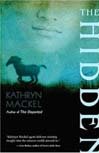 Set in rural Colorado (with Boston-based bookend scenes), the novel deals with a family whose emotional and psychological and spiritual scars rival those found on the back of a young man found shackled in a cave at the bottom of a ravine. The characters are complex if a bit angsty. And while some of conversations are thinly veiled “tell me your problems” info dumps, there is genuine character development and believable working-out of conflicts. Mackel spreads the grue with gusto in a few places (your mileage may vary, but I prefer extra-chunky grue on my road pizza) as a serial-killer stalks our hero(in)es, although she pulls her punches occasionally (and there’s a segment or two where the narrative gets sketchy in order to maintain the villain’s secret identity). Overall, however, there’s a lot to recommend the book (OMG ponies!!!) as a beach read or in-flight entertainment—and enough chills to suggest you not read it whilst spelunking.
I sent off a handful of questions to Kathryn, and she graciously didn’t file a restraining order:
(Other links of note: Colorado Christian Writers Conference, the music of Steve Bell.)
Depending on how your fiscal quarters are structured, you may be able to get both books on Thursday, but I still recommend The Hidden over House. Then again, maybe that’s not the ringing endorsement I intend: I recommend the nutrition panel on a cereal box over House (not quite as much cardboard and contents that are maybe even more scary—pyridoxine hydrochloride? <shiver>).
Set in rural Colorado (with Boston-based bookend scenes), the novel deals with a family whose emotional and psychological and spiritual scars rival those found on the back of a young man found shackled in a cave at the bottom of a ravine. The characters are complex if a bit angsty. And while some of conversations are thinly veiled “tell me your problems” info dumps, there is genuine character development and believable working-out of conflicts. Mackel spreads the grue with gusto in a few places (your mileage may vary, but I prefer extra-chunky grue on my road pizza) as a serial-killer stalks our hero(in)es, although she pulls her punches occasionally (and there’s a segment or two where the narrative gets sketchy in order to maintain the villain’s secret identity). Overall, however, there’s a lot to recommend the book (OMG ponies!!!) as a beach read or in-flight entertainment—and enough chills to suggest you not read it whilst spelunking.I sent off a handful of questions to Kathryn, and she graciously didn’t file a restraining order:
- Which “darling” (character/scene/plot element) was most painful to kill?
Interesting question.
My original conception of the story and my pre-first draft opened with Susan dreaming she was working in a beautiful garden. We hear wheels and see three-year-old Christopher riding around on his little bike. As the scene expands, we realize it’s the rooftop garden of her penthouse apartment, a place of beauty where she feels perfectly safe because she’s literally above it all, and the walls are so high. Christopher knocks over a plant and she lovingly shoos him in another direction. She tracks him by listening to the creak-creak-creak of his wheels. Then the creaking stops. She brushes off the dirt and goes looking for him.
She finds him, still on his bike, poised at an opening in the wall that is not supposed to be there. “No!” she cries out but he bravely puts his foot to the pedal and pushes hard. He remains suspended for an impossible moment, looking back with a sad smile. And then he falls.
It perfectly captures Susan’s torment and sets her up for the real opening of the story. (The middle-of-the-night phone call about her father’s fall from the horse.) But it was too intense, I thought, to open the book. You might, however, see it in the movie! - A major theme of the book deals with kids who feel their parents have let them down (and in some cases it's more than a “feeling,” the kids have been let down). Any advice for readers who feel that way? [Note to my parents and in-laws: this has nothing to do with you...]
One of the hardest elements of faith is trusting in a heavenly Father when our own earthly parents may have not only let their children down but—in my character Susan’s case—actively tormented them. We come to the Father through the Son, and this is the best avenue of contact for a broken-hearted son or daughter. We can live in the Gospels and enjoy the Son of God—also known as the Son of Man—who showed such incredible compassion, tenderness, and even rebuking to those He loved.
A practical way to help move past a rocky childhood is to connect with older ‘saints’ in our church. They become our true mothers and fathers in the best sense of the word. Eventually, they can help us come to the forgiveness that is impossible on worldly terms. In The Hidden, Susan can’t even start the road to forgiveness until she speaks aloud the damage that was done to her—and her fury at a God who allowed such damage.
There is a time to admit such things, and a time to move past them. I’m not speaking in theory here. My parents loved my sisters and myself with a strong love. But their alcoholism created havoc for each of us in different ways. It was only through writing The Hidden that I had that “duh” moment in which I realized I needed to stop holding them responsible for what I consider the slings and arrows of my own personality. - If/When a movie is made of The Hidden, which style soundtrack would you prefer: an Ennio Morricone Western score or a John Williams Thriller?
One of the desires of my heart is to write a movie splendid enough to merit a John Williams score. The Hidden would be a quieter story than what he normally tackles, but he’d do splendid justice to the mountains and the horses. If a filmmaker could be persuaded to include Jacob’s creation and crucifixion experiences, then Williams could write on the most epic scale imaginable. Whoa...you’ve got me going now. - And a another question about horses and songs, Which of the following do you like best? “Mustang Sally” by Wilson Pickett, “One Trick Pony” by Paul Simon), “Horse with No Name” by America?
Okay, you’ve outted me. I’m not a big music buff, except for classical music and Steve Bell. But, at the risk of inserting a plug, Victoria James has written an incredible song for The Hidden called “Be Still.” Vicki has been writing songs for my books since I needed a lullaby for The Surrogate. What’s amazing is that, when she finished the song for The Departed, she also sent me “Be Still.” She said she had no reason why she should be sending it but I nearly cried when I heard it. She knew nothing about The Hidden and yet the Holy Spirit had completely moved her to write the perfect song for the book.
Since I’m way overdue on updating my website, folks can listen to it on hers (www.victoriajamesmusic.com). It is SO worth the visit. Sometimes I wonder how I could possibly be more blessed than through our partnership in story and song. - Your story takes place in Colorado, as does Ted Dekker’s recent Showdown (pivotal scenes of Stephen Kings’s The Stand, too). What’s so scary about The Centennial State?
The Centennial State scary? Nah. Colorado is majestic, which is what drew me to set the story here. And, to further illustrate the Lord’s provision, let me tell you this. I’m in the Northeast, near rural New Hampshire where we have plenty of horse farms. But when I went calling around for some help on my horse stuff, no one returned my phone calls or emails! Last year at this time, I had already started the book with scads of xxx’s where all the horse stuff should be. [Note for beginning/non-writers and folks who arrived at this post by googling xxx: the xxx’s she’s referring to are placeholders, not porn or anything to do with Vin Diesel, though maybe he’ll be in the big-screen, John Williams-scored version. Continue, Kathryn...] At the Colorado Christian Writers Conference, I mentioned at breakfast that I was totally out of time for finding expert help (and wondering why God wasn’t answering my prayers on the matter!) This person said, “Oh, I’ll send Jo Lauter to see you.”
Jo was in the Arabian industry for thirty years, a fellow writer, and simply out-of-this-world passionate about horses. She leaped at the opportunity to be my expert.
But here’s the amazing thing. I still hadn’t found a suitable locale that would combine horse farms with nearby mountains. “Easy,” Jo said. “Steamboat Springs, where I’m from.”
Okay—get ready. Here’s the big God thing among all His glorious provision for this book. A few months earlier my husband and I had booked a vacation to follow the conference. You got it—Steamboat Springs!
So how could I possibly think of Colorado as scary. Because for me, it’s the place where “I sing the mighty power of God, who makes the mountains rise!”
(Other links of note: Colorado Christian Writers Conference, the music of Steve Bell.)
Labels: Book Chat, Book Reviews
Thursday, April 27, 2006
Book Chat with Brandilyn Collins
I had the pleasure of meeting author Brandilyn Collins at the Mount Hermon Christian Writers Conference in Mount Hermon, Calif., earlier this month. In addition to receiving some wonderful criticism on my work-in-progress manuscript, I had lunch with her and her husband and daughter (and four other conference attendees). Was the meal burritos? The conference is still a blur. Anyhoo, a wonderful time was had by all, even Brandilyn's daughter who dealt magnificently with mom trying to set her up with writers from the teen track.
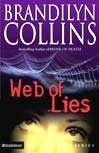 Brandilyn's latest book is Web of Lies, the fourth and apparently final (though WoL demonstrates that there may be some wiggle room here) book in the Hidden Faces series. Joining Annie Kingston in this outing is Chelsea Adams (a character readers said goodbye to in 2002's Dread Champion). When a killer strikes in broad daylight, the pressure is on Annie to help stop him before he kills again. The adrenaline spikes when Chelsea brings Annie a vision of a sadist with a penchant for spiders. And then a skeleton turns up practically in Annie's backyard. And then ... no, that would spoil the fun.
And fun it is. Web of Lies is a well-crafted and -characterized novel. Heck, after Chapter 15 I had to remind myself to b r e a t h e (the tagline for Brandilyn's brand of "seatbelt suspense" is "don't forget to breathe" -- she's not exaggerating). There were a couple moments when I felt Annie was getting a bit angsty and victimy about the treatment she receives for being a Christian, but it didn't detract from the flow of the story (and was not outside of Annie's character, either). Longtime readers will no doubt be anticipating the "final twist" and they won't be disappointed; this one's a doozy -- it's burdened by some of the problems of a sci-fi time travel plotline, but it holds up well under analysis.
Prior to this I'd only read the first book in the Hidden Faces series, but WoL doesn't seem to have spoiled my future enjoyment of the intervening novels. If you haven't read any of the books (or the Chelsea Adams series), don't worry. Just fasten your seatbelt and keep your arms and legs inside the cabin until the ride comes to a full and complete stop. And that breathing thing? Seriously. Pack an oxygen tank or two.
As part of this month's Christian Fiction Blog Tour, Brandilyn Collins answered a half dozen questions for me. Read on:
To read Brandilyn's current blog post, visit Forensics & Faith. Enjoy!
(Now through April 30, Borders Rewards members (free membership) can save 30% off Web of Lies--or any other novel--at Borders, Borders Express, or Waldenbooks with this coupon. Non-members can still save 10%; so if you're in the witness protection program--or on the run from aliens that track you through corporate databases--you're in luck, too! Amazon has the book for 23% off, though you'd have to buy two and a half copies to qualify for free shipping.)
Brandilyn's latest book is Web of Lies, the fourth and apparently final (though WoL demonstrates that there may be some wiggle room here) book in the Hidden Faces series. Joining Annie Kingston in this outing is Chelsea Adams (a character readers said goodbye to in 2002's Dread Champion). When a killer strikes in broad daylight, the pressure is on Annie to help stop him before he kills again. The adrenaline spikes when Chelsea brings Annie a vision of a sadist with a penchant for spiders. And then a skeleton turns up practically in Annie's backyard. And then ... no, that would spoil the fun.And fun it is. Web of Lies is a well-crafted and -characterized novel. Heck, after Chapter 15 I had to remind myself to b r e a t h e (the tagline for Brandilyn's brand of "seatbelt suspense" is "don't forget to breathe" -- she's not exaggerating). There were a couple moments when I felt Annie was getting a bit angsty and victimy about the treatment she receives for being a Christian, but it didn't detract from the flow of the story (and was not outside of Annie's character, either). Longtime readers will no doubt be anticipating the "final twist" and they won't be disappointed; this one's a doozy -- it's burdened by some of the problems of a sci-fi time travel plotline, but it holds up well under analysis.
Prior to this I'd only read the first book in the Hidden Faces series, but WoL doesn't seem to have spoiled my future enjoyment of the intervening novels. If you haven't read any of the books (or the Chelsea Adams series), don't worry. Just fasten your seatbelt and keep your arms and legs inside the cabin until the ride comes to a full and complete stop. And that breathing thing? Seriously. Pack an oxygen tank or two.
As part of this month's Christian Fiction Blog Tour, Brandilyn Collins answered a half dozen questions for me. Read on:
- (with apologies to Steve Martin) We met at Mount Hermon earlier this month. What was it like meeting me for the first time?
Quite wonderful, naturally. I had the honor of critiquing your manuscript, talking with you personally, and generally getting to know you a little bit. It's great to meet someone like you who's talented and working hard on the craft, and is receptive to new ideas.
And--if you don't mind my saying so publicly, I was MOST impressed after Mount Hermon to receive a thank you note from you. Wow. Most females don't send thank you notes via mail anymore, must less a male. I read that card and thought, "Impressive. Somebody raised this boy right."
[Far be it from me (and my tenuous place in the will) to diminish the effort my folks put into my upbringing, but the thank-you note idea came from Terry Whalin's blog, along with the notion of handing out business cards at conferences.] - I always like when a DVD includes deleted scenes and outtakes. Were there any things in Web of Lies that were cut or didn't work out right the first time around?
Nothing that was cut. I have lots of problems with writing, but one thing I don't do is write a scene only to cut it later. Seems like a royal waste of time to me. If it ain't needed, it ain't created in the first place.
What did change was the Point of View. At first the entire story (well, other than the "bad guy" third person POV) was written in the first person POV of the protagonist, Annie. I just didn't know if I could mix first person and third person POVs for the various lead characters. But the story didn't work right without these other POVs.
In the end I learned even more emphatically what I already knew: STORY RULES. Yeah, the "writing rules" say don't mix first and third POVs, esp. for your protagonists, but if that's absolutely what you must do for the story's sake, the reader's not gonna care. The reader cares about the story working. - Detective Tim Blanche is going through life with a feminine surname. How much of a factor does that play in him being a jerk? (Not that people with feminine surnames are all jerks, but the man has issues.)
Sheesh, Chris, leave it to you to think of this. I never even thought of his last name as being feminine. He's certainly not a feminine character. He's just. . . arrogant. And in Web of Lies he gets caught up in a situation that only makes his arrogance rise to the top.
That's the problem with arrogance. When you think you have all the answers and are better than those around you, you end up focusing too much on yourself--to the detriment of others. Then if you're caught in a mistake, it's all the harder to admit. Tim Blanche is involved in a highly watched case, and he knows he has to make the right decisions, or he's really gonna be fried in the media. As a result, he ends up perhaps protecting his own reputation at the cost of doing the best for the investigation. - You've done a great job of creating Barrister Court, but your description of Redding is pretty generic. What is the likelihood that real-life places like Whiskeytown Reservoir, Turtle Bay Exploration Park, the "big box" developments on Hilltop, houseboating on Lake Shasta, will provide "local flavor" in future books?
Web of Lies is the last book in the Hidden Faces series, so there won't be any additional "local flavor." There's a bit more in book #3, Dead of Night, which features different surrounding areas and some roads. But I actually kept the city setting pretty generic on purpose, mostly because I wanted to focus on the immediate world of Annie's neighborhood.
You raise a very good question, Chris, because this is an issue I go back and forth on. Where does an author leave the real world and jump into fiction? In my first two suspenses featuring Chelsea Adams, (Eyes of Elisha and Dread Champion), I created a fictional town smack in the middle of the California Bay Area. I did this because I didn't want to be bound by the police force in a real Bay Area town--everything from the color of the carpet in the station to the picky little details of how they, as opposed to their next-door city, would handle a case.
Now with the Hidden Faces series, I've chosen a real city, but the action doesn't really take place in the city as much as around it. And "around it" is my fictional part, to a big extent. So what I ended up doing is creating the fictional world within the real world that I needed to best aid my stories, then including a bit of "disclaiming" in my notes to readers, saying what's real and what isn't. As a result, people who know Redding and expect to find a lot of local flavor aren't going to find it. This may be disappointing. The majority of readers, who don't know Redding, won't know the difference. - Annie chalks up a lot of her conflict with Blanche to her Christianity (he doesn't like/respect me because I'm a Christian) as opposed to the fact that she's a woman, she's from out-of-town, she doesn't have his education--as well as simply his own ego (which does get brought up). How much of that is a) accurate and b) Annie projecting others' expectations and then finding ways she doesn't measure up? Do you see her maturing in this area (gaining a broader perspective of Blanche's prejudices and/or not caring what he thinks)?
Another great question. Annie has not had a problem gaining respect from local law enforcement, so the question of gender or being from out of town really doesn't come into play. Annie sees Tim Blanche accurately--because he hasn't bothered to hide his cynicism about her faith. At the same time, as the underlying character arc in Web of Lies shows, Annie does have trouble understanding and believing her own sense of worth, and this, she needs to overcome. She does learn about herself in this book, but again, with Web of Lies, I ended the series, so we're not going to see her further growth. All in all, Annie's character arc from book #1, Brink of Death, to book #4, Web of Lies, spans about four years and takes her quite a ways in her maturation as a divorced mother and as a new Christian (in Brink of Death, she's not a Christian and has little understanding of Christianity).
A series with character arcs in each book presents quite a few challenges. First, there's getting the balance just right as to how much the character grows within each book, and what weaknesses to leave for the next, and then there's the challenge of ending the series as a whole. The books generally end upbeat, but I'm not going to "fix" everything, even in the last book. The character's still got to have weaknesses, still have much to learn--because that's reality--even while my aim is to satisfy the reader with the growth to date. - I've heard that you have to be really, really smart to write suspense fiction. What's your educational background/how did you learn to write, and what's your recommendation for those of us just starting out?
Oh, ha-ha. Let me guess where you got this. Could it be our good friend the Snyde Guy (Mike Snyder) who royally put his foot in his mouth by telling me he wasn't "smart" enough to write certain other kinds of fiction so he thought he might try suspense? Now of course, his take on this conversation is a bit different. His is a conglomeration of much red-faced backpedaling after I blinked hard and suggested he might want to rephrase his opening line.
By the way, the Snyde Guy IS smart, and he's written a great story. And no, it's not suspense. But it does have a clairvoyant dog.
On second thought, maybe he's not all that smart.
SG, that is. I'm sure the dog is brilliant.
As for my own journey toward learning how to write, best thing is to direct you to the "How I Got Here" story on my blog, dubbed the NES for "Never-Ending Saga," as it took over 60 posts to tell. It's become quite infamous in our little blogdom world. Long? Yes. Smart? You betcha. Entertaining? Sure. With melodrama, cabinet-kicking, hopes shattered, dreams pursued, hooks at the end of chapters, and so much more. (This beginning to sound like one of those TV buy-now commercials.) You'll find the first post on Thursday, February 24, 2005.
To read Brandilyn's current blog post, visit Forensics & Faith. Enjoy!
(Now through April 30, Borders Rewards members (free membership) can save 30% off Web of Lies--or any other novel--at Borders, Borders Express, or Waldenbooks with this coupon. Non-members can still save 10%; so if you're in the witness protection program--or on the run from aliens that track you through corporate databases--you're in luck, too! Amazon has the book for 23% off, though you'd have to buy two and a half copies to qualify for free shipping.)
Labels: Book Chat, Book Reviews, Brandilyn Collins
Thursday, March 02, 2006
Book Chat With Brenda Coulter
I've had the privilege of starting Brenda Coulter's novel, A Family Forever (now on sale!). I haven't finished yet (I will though, promise), but what I've dipped into so far has been well written and enjoyably read. Check out some of the other sites on the Blog Tour for more feedback on the book (check the comments if links aren't in the body of the post). Brenda's also got a blog; be sure to stop by there, too.
Brenda took a chance and agreed to answer some of my questions. Take a look:
Thanks for playing along, Brenda. I'm sorry I haven't finished your book; I left it until the final week and then ran short of pleasure-reading time. And reading your book has been a pleasure. I'll buckle down and take the reading of your third inspirational romance -- Fervent Love, Virtuous Loins -- more seriously. Honest.
Brenda took a chance and agreed to answer some of my questions. Take a look:
- Which darling (character/scene/plot element) was most painful to
kill?
I tend to write long, so I did have to do a good bit of cutting, and then my editor pared things down further. But I honestly can't remember any particular darlings that I had to kill. That doesn't mean I didn't kill any; simply that I have an uncanny ability to forget my dead darlings after a shockingly brief period of mourning. I couldn't even tell you where they're buried--unlike many authors, I don't keep files of deleted scenes. So when I say I can't think of any examples of the darlings I've killed, I'm not ducking the question. I'm admitting that I'm a callous creator. - The Estrogen Channel wants to make a movie of the week based on A Family Forever (AFF). They've got an unlimited budget ... who's your dream cast?
Oh, why don't we just sign a bunch of unknowns and make 'em famous? - What's the perfect music to listen to while reading AFF?
Beats me. I can tell you that I listened to a lot of alternative and classic rock while writing it. (That scene where Tucker's wearing an open Hawaiian shirt and riffing on an air guitar while the radio in his garage is blaring? I didn't put this in the book, but he was groovin' to Clapton, just like I was. Or maybe it was the Duane Allman. I forget.) I also listened to a lot of Celtic music and a bunch of violin concertos. (I almost wrote "concerti," which is the proper plural, but I was afraid you'd think I was showing off.) - The Bon Bon-Bon Compaigne of Belgium wants to start a line of
Romance Chocolates: describe the flavor, texture, etc., of AFF?
It's a rich, dark chocolate truffle, rolled in granulated sugar. I don't want to get any more descriptive than that because there's no sense getting myself all worked up when there's no chocolate of any kind in my house at present. - In response to my "101 Household Uses" for your novel, you suggested making paper airplanes [this would be super-secret use #103], What's your favorite style?
The classic dart [Chris says: it's in the middle of the page], no contest. Simple and quick to make, it's a proven performer. No wonder it's still the number one choice of bored geometry students everywhere.
Thanks for playing along, Brenda. I'm sorry I haven't finished your book; I left it until the final week and then ran short of pleasure-reading time. And reading your book has been a pleasure. I'll buckle down and take the reading of your third inspirational romance -- Fervent Love, Virtuous Loins -- more seriously. Honest.
Labels: Book Chat, Book Reviews
Thursday, December 15, 2005
Book-Chat with RK Mortenson
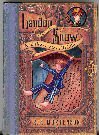 Author RK Mortenson is traveling the web popping in here and there to promote his newish book (out last fall) Landon Snow and the Auctor's Riddle. I had the pleasure of reading the book and running a handful of questions by Randy (his middle initial is a mystery, but I think it stands for Kickbutt, 'cuz that's what his book did).
First, a few words about the book. The majority of the book takes place in an unnamed world of imagination accessed through secret doors and a magical Book of Meanings. Once there, Landon Snow must solve the Auctor's Riddle:
That man eats cow eats grass eats soil
And then man dies, and when he lies
To soil he does return?
Because, y'know, there's nothing eleven-year-old boys like to do more than hunt down the mysteries of the universe in their pajamas (how the mysteries got in their pajamas, I'll never know). Along the way he befriends a chessknight/horse named Melech and meets a handful of supporting characters ranging from the oddly-strange (like the definitions guy) to the strangely-odd (like, well, the gnomish tribe of Odds).
I passed the book along to my tweenish nephew Nick hoping to get his take on it, but he was caught up in another novel on the cruise last week. I'll post his reaction when he's finished the book. My reaction? Here goes:
I really liked everything after the first couple-three chapters. The opening is slow -- car ride to your grandparents' house slow (which is not surprising since that's how the book opens). Once the first secret door opens, however, the pace picks up and the action becomes well-balanced with enjoyably witty humor.
While it's unfair to compare Landon Snow with Harry Potter or Lemony Snicket's Baudelaire orphans, it's also inevitable. Snow lacks the cynicism of his YA shelfmates, his world not being shaped by the murder of his parents and life with decidedly non-avuncular uncles. And although the slowish opening made it difficult to get into the book (a "flaw" I also found in Tolkein's Vol. 1 of Lord of the Rings, so Mortenson's in good company), accepting Landon as a well-behaved, unjaded, snarkless kid was even harder. You mean kids can be mostly polite? (He has a couple younger sisters, so there are limits.) Imagine that. And once I was able to imagine that, Landon and I got along fine.
So, my take on the book? Buy it. In fact, buy two and give one as a gift this Christmas. It looks and feels gorgeous and really is a very good read. (If you're not into the whole online-shopping thing, or can't wait for delivery, check the inventory of your local Borders and get it for 30% off through 12/19.)
And now, without further delay, Five Impertinent Questions with RK Mortenson:
- Which darling (character/scene/plot element) was most painful to kill?
I don't feel it at all now, and I was grateful even then for the suggestion, but my editor asked me to change the opening and closing scenes (the "real-world" stuff) from Grandpa Karl's POV to Landon's. Like I said, it made sense to me to do this even then, but it was painful. I had gotten to know and like "being" Grandpa Karl, but I had to let him go. At least his point-of-view in the story.
That change had a ripple effect that led to others, but they weren't as drastic overall. - Disney wants to add Landon Snow to Fantasyland, replacing Snow White (can't have too much snow in Florida or Southern California, y'know). Do you say "go for it!" or hold out for a rollercoaster in Frontierland at the Jungle Cruise site -- and why?
Yes! (That was a general response to the initial thought of a Landon Snow attraction at the park.) Hmm ... for the book's sake I'd say Landon belongs in Fantasyland near Alice's spinning teacups, which I really don't like to ride because of all that spinning and the grating whistling-kettle music. Wait, the Jungle Cruise is in Adventureland, not Frontierland, isn't it? [he is, of course, correct] I like the atmosphere in Adventureland, so let's put the ride there. Or how about we combine the two: you ride through the Book of Meanings to the chessboard in Fantasyland, and then you ride the knight-turned-horse through the "sky" and fall into some woods between Adventureland and Frontierland. I'm sure the Imagineers could handle that. - Which character or scene would you most like to see on a Topps trading card?
Well I've got to go with the knight/Melech on one of those shiny 3-D cards that zip when you scratch them. Turn the card one way: chess knight. The other way: Melech. Chess knight/Melech, Chess knight/Melech... - Landon Snow Underoos, yea or nay?
You mean besides the pair I'm wearing? Honestly though, in all truth, I am really hoping for a line of Landon Snow pajamas. - Any chance of a prequel and who plays young Bart Benneford in the movie (and should it be live action, CGI-animated or shadow puppets)?
I'm thinking maybe three prequels should do it, or perhaps a whole new series about B. G. B. Anyway, it's live action and I have to go with Russell Crowe. Or is he too old now? If he is too old, then we'll go with shadow puppets all voiced by Frank "Jedi Master I am" Oz.
For more on Landon Snow, check out Mortenson's other Blog Tour stops and be sure to stop by his website for even more fun.
Labels: Book Chat, Book Reviews


